
UX Techniques and other Deliverables
Here are listed some of the UX techniques and deliverables that I used during execution of projects, like following the Agile methodology while working on UX deliverables, maintaining the atomic Structure for design components which helps for maintaining consistency and speed up to update or incorporate the feedback changes on design, conducting Heuristic evaluation of the existing design, maintaining the screen flow mapped to the requirement ID (in JIRA or requirement document)
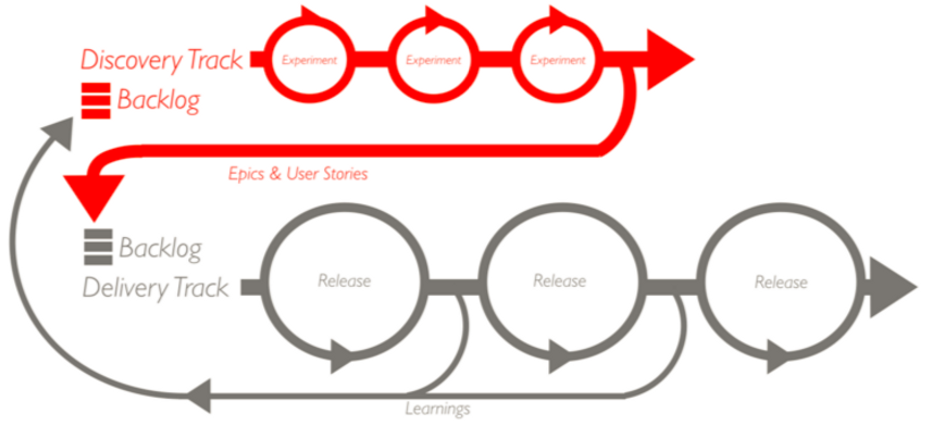
Dual-track Agile
Dual-track agile concept has two scrum boards (discovery track and delivery track), where the delivery track board has the development stories to be picked up by the development team, the second board discovery track has the stories created by the business analyst or product owner and the UX user stories, this is a kanban board and has the stories which are in creation or updating stage, once the stories are completed with required UX stories, these are moved to the delivery board.
Persona
Personas are fictional users with real data, the following persona was created for a telecommunication and networking company, a total of eleven users was interviewed over teams meeting one by one, where we tried to understand the as-is ways if working for the different projects, major features which are important to users, the

User Journey Map
Following is the sample deliverable for User Journey Map, it was created for one of biggest home improvement store customer in UK, where the UJM was for a particular feature which was used by the colleagues extensively, the main task was divided in sub task that the users perform to accomplish the main task/Goal. the the various touch points for different subtask were considered even the physical actions like walking and collecting print out was also included. the user emotion were displayed as per the task goes on. the pain-points and areas for improvement was mapped on this particular USER JOURNEY.

Heuristic Evaluation (with Nielson's Heuristics )
For one of existing mobile application of a retail customer was evaluated for interaction design by using the Nielson-Moolich heuristics given standard interface evaluation points, the flows and screen shots were captured and the heuristics violations were documented by giving the detail of the heuristic Points that it violates, severity and recommendation.


Screen Flows
The wireframes and screen flows were created for most of the projects while using Adobe XD to have better understanding of the screen flows for a given functionality, by doing this the feature requirement ID can be mapped to the screen flow in the designing software, this also helps in creating and mapping of other flows (flows other than the happy flow use case, negative use cases)

Atomic Designs
I always try to create the designs with atomic design technique, where the smallest UI element are design or picked from designed system (e.g primary buttons, secondary buttons, text input fields, radio options, cards, tiles, icons) and with those smallest elements which are called atoms is created molecules (molecules are nothing but the UI components that are created by combining the atoms), then the molecules are used in combination to create organism (these are the bigger sections in the screen/ pages), then the organisms are combined to create the page templates and further actual designed on pages. This technique helps in updating and maintaining the designs and make it easy and fast changes on the design.
